

Navigating the world of currency exchange can feel like trying to solve a Rubik’s Cube blindfolded. The euro to Turkish lira exchange rate is no exception. With fluctuations that can make your head spin faster than a whirling dervish, understanding this pairing is crucial for travelers, investors, and anyone with a penchant for kebabs and baklava.
Whether he’s planning a vacation in Istanbul or she’s eyeing a business opportunity in Ankara, knowing the current exchange rate can save them from a financial faux pas. After all, who wants to be that person who accidentally pays 50 lira for a cup of tea? Buckle up as we dive into the ins and outs of this dynamic currency duo, helping them make sense of the numbers and keep their wallets happy.
Overview Of The Euro To Turkish Lira Exchange Rate
The euro to Turkish lira exchange rate exhibits significant volatility. Various factors impact this rate, including economic indicators, geopolitical events, and market sentiment. For travelers, understanding the current rate proves beneficial, as fluctuations can affect budgets and overall expenses in Turkey.
Recent data highlights that in early 2023, the exchange rate fluctuated between 20 and 22 lira per euro, reflecting broad economic conditions. Investors closely monitor trends in this pairing, as shifts in the exchange rate can signal larger economic movements within both regions.
Economic policies set forth by the European Central Bank and the Central Bank of the Republic of Turkey significantly influence the exchange rate. Changes in interest rates or inflation reports typically lead to immediate reactions in the currency market. Such events reinforce the necessity for individuals engaged in foreign exchange to stay informed.
Market conditions and investor confidence also play critical roles in the exchange rate. High inflation in Turkey often leads to depreciation of the lira against the euro. Data from the Turkish Statistical Institute frequently reveals insights into inflation rates, influencing decisions for those dealing with this currency pair.
Keeping an eye on the euro to Turkish lira exchange rate proves essential for both travelers and investors. Staying updated with real-time data and understanding broader economic indicators helps individuals navigate this currency landscape effectively.
Historical Trends
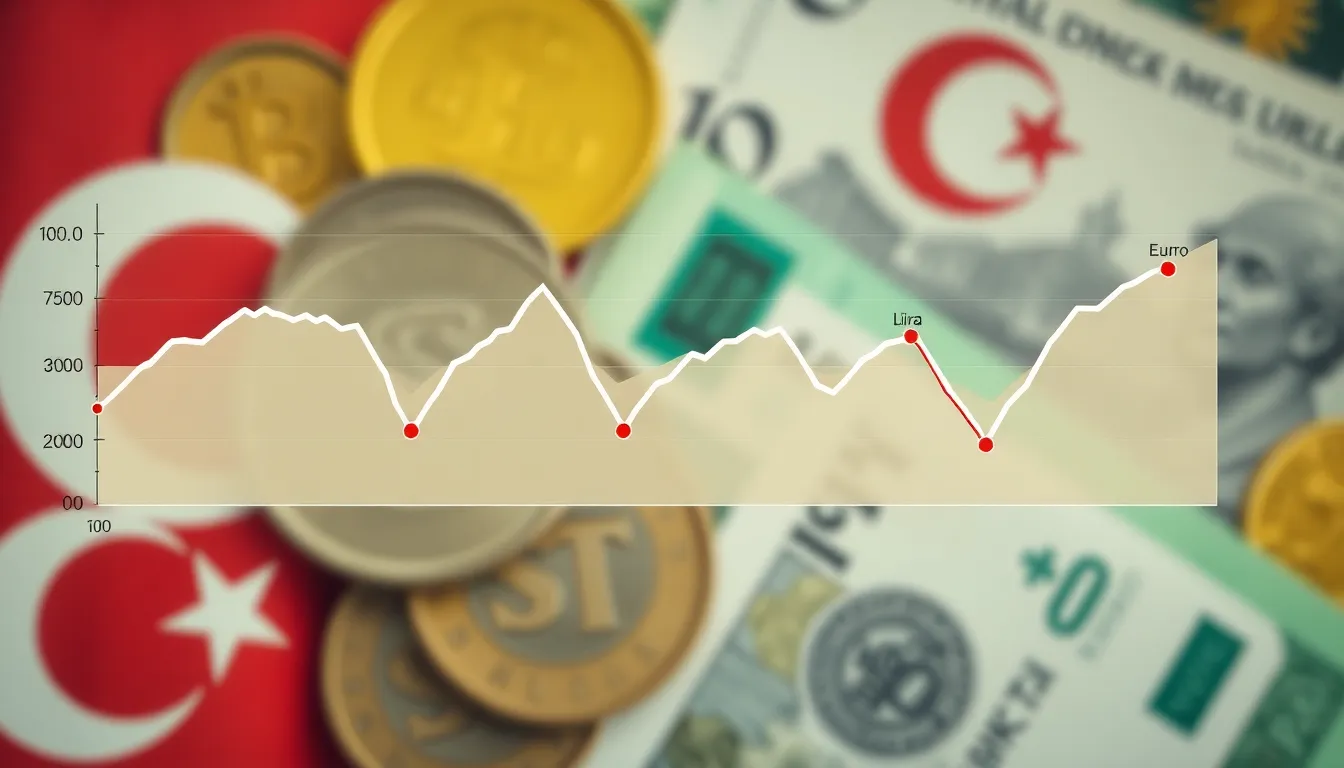
The euro to Turkish lira exchange rate has experienced significant fluctuations over the years, marked by various key events and long-term trends. Understanding these trends can help travelers and investors make informed decisions.
Key Events Influencing Changes
Key economic policies and geopolitical shifts frequently impact the euro to Turkish lira exchange rate. For instance, decisions made by the European Central Bank often affect investor confidence, leading to sharp movements in the exchange rate. Notable political developments within Turkey, such as elections or policy changes, also influence the lira’s strength. High inflation rates in Turkey have historically depreciated the lira against the euro, creating volatility. Observing these influential events provides insights into potential future fluctuations.
Long-Term Trends
Long-term trends reveal a pattern of depreciation for the Turkish lira against the euro. Over the past decade, consistent inflation, along with structural economic challenges, has positioned the lira in a downward trajectory. Exchange rates that fluctuated from 2.5 lira per euro in 2012 to rates exceeding 20 lira per euro in early 2023 illustrate this shift. External factors, like economic sanctions or global market trends, contribute to lira depreciation as well. Tracking these long-term trends remains crucial for understanding the overall context of the euro to Turkish lira exchange rate dynamics.
Current Exchange Rate Analysis
The euro to Turkish lira exchange rate remains a focal point for travelers and investors. Recent trends show significant fluctuations, highlighting the need for vigilance.
Recent Fluctuations
Exchange rates experienced notable shifts in early 2023, fluctuating between 20 and 22 lira per euro. These variations illustrate how quickly market dynamics can change. Annual data suggests the lira underwent drastic depreciation over the past decade, influenced by various economic conditions. Investors noticed these shifts alongside key geopolitical events, which contributed to the growing volatility. Consistent monitoring of these fluctuations allows for more informed financial decisions, especially for those planning travel or investments.
Factors Affecting The Current Rate
Numerous factors influence the exchange rate, including economic policies and geopolitical developments. Policies set by the European Central Bank and the Central Bank of the Republic of Turkey contribute significantly to rate changes. Interest rates play a crucial role; higher rates in the eurozone can strengthen the euro against the lira. Additionally, inflation rates in Turkey often create downward pressure on the lira, impacting overall economic stability. Investor sentiment also shifts based on political events, such as elections and policy changes, further affecting the currency landscape. Keeping abreast of these influential elements helps in navigating the intricacies of this exchange rate.
Predictions And Future Outlook
The euro to Turkish lira exchange rate remains subject to various influences, which makes predictions challenging. Key economic indicators provide crucial insights into future trends.
Economic Indicators
Inflation rates significantly impact the lira’s value against the euro. Recent reports indicate that Turkey experiences high inflation, influencing currency depreciation. Changes in interest rates also play a vital role; adjustments by the Central Bank of the Republic of Turkey might stabilize or further weaken the lira. Furthermore, GDP growth rates, employment statistics, and trade balances serve as indicators of economic health, directly affecting exchange rate predictions. Monitoring these factors leads to informed financial decisions for travelers and investors alike.
Market Sentiment
Investor sentiment creates waves in currency exchange. Political stability and economic forecasts shape perceptions, directly affecting the lira’s performance. Recent developments in Turkish politics, including elections and governmental reforms, have heightened volatility in the exchange rate. Moreover, traders closely watch European Central Bank decisions; shifts in policies can trigger significant market reactions. Understanding how sentiment influences currency dynamics helps individuals navigate future fluctuations in the euro to Turkish lira exchange rate effectively.
Tips For Travelers And Investors
Travelers and investors benefit from understanding the current euro to Turkish lira exchange rate. Keeping track of fluctuations helps avoid unexpected losses. Monitoring economic indicators like inflation and interest rates provides valuable insights.
Regularly checking exchange rates online ensures access to real-time data. Utilizing currency converter apps can simplify transactions. Knowing where to find the best exchange rates, such as at local banks or currency exchange offices, reduces costs.
Evaluating the historical trends of the euro to lira exchange rate helps identify patterns. The rise from 2.5 lira per euro in 2012 to over 20 lira in early 2023 illustrates this volatility. Awareness of these changes supports better financial decision-making.
Political stability in Turkey plays a significant role in currency value. Preparing for potential shifts in sentiment can protect investments. Engaging with local financial advisors enhances understanding of the Turkish market.
Investors should assess the broader economic landscape, including GDP growth and trade balances. Analyzing these factors reveals potential risks and rewards. Staying informed about European Central Bank policies also impacts the direction of the euro.
Keeping a close watch on time-sensitive news updates strengthens one’s position. Setting alerts for significant fluctuations can provide timely opportunities for transactions. Engaging with expatriate forums or local communities can offer additional perspectives.
Understanding the intricacies of the euro to Turkish lira exchange rate enables informed choices for both travelers and investors. Prioritizing information sources enhances the likelihood of successful financial outcomes.
Navigating the euro to Turkish lira exchange rate requires a keen awareness of the factors at play. Travelers and investors must stay informed about real-time data and economic indicators to make sound financial decisions. The ongoing volatility highlights the importance of monitoring fluctuations and understanding their implications.
By keeping abreast of political developments and economic policies, individuals can better anticipate changes in the exchange rate. Utilizing available resources like currency converter apps and engaging with local financial advisors can further enhance decision-making. Ultimately, a proactive approach to understanding this currency pairing can lead to more favorable outcomes in both travel and investment scenarios.