

When it comes to family bonding, nothing beats the thrill of a good card game. Whether it’s a rainy afternoon or a cozy evening, card games bring everyone together for laughter, competition, and maybe a little friendly rivalry. Imagine the joy of watching Grandma outsmart the kids while Dad tries to hide his poker face—priceless moments like these are what family memories are made of.
Overview of Card Games for Families
Card games serve as an engaging way for families to connect and interact. They provide a blend of strategy, skill, and luck, appealing to all ages. These games often encourage teamwork and communication, allowing members to strategize and enjoy each other’s company.
Many families find enjoyment in classic games like Uno, Go Fish, and Crazy Eights. These titles attract younger players while still entertaining adults. Not only do they offer fun, but they also facilitate critical thinking and problem-solving skills. Parents can use these moments to teach children about fairness, patience, and sportsmanship.
Choosing the right card game can accommodate different family dynamics. Games with simple rules fit well for younger kids, while more complex games challenge older children and adults. Families can also explore themed card games that revolve around favorite movies or TV shows, enhancing the overall experience.
Positive social interactions often arise from playing card games. Laughter and lighthearted competition can lead to lifelong memories. Moreover, regular game nights promote consistency in family bonding, enriching relationships.
Game nights benefit from a variety of card games to maintain engagement and interest. Rotating through different games keeps the experience fresh and enjoyable. As families explore new card games, they can discuss strategies and share experiences, further strengthening their connections.
Benefits of Playing Card Games
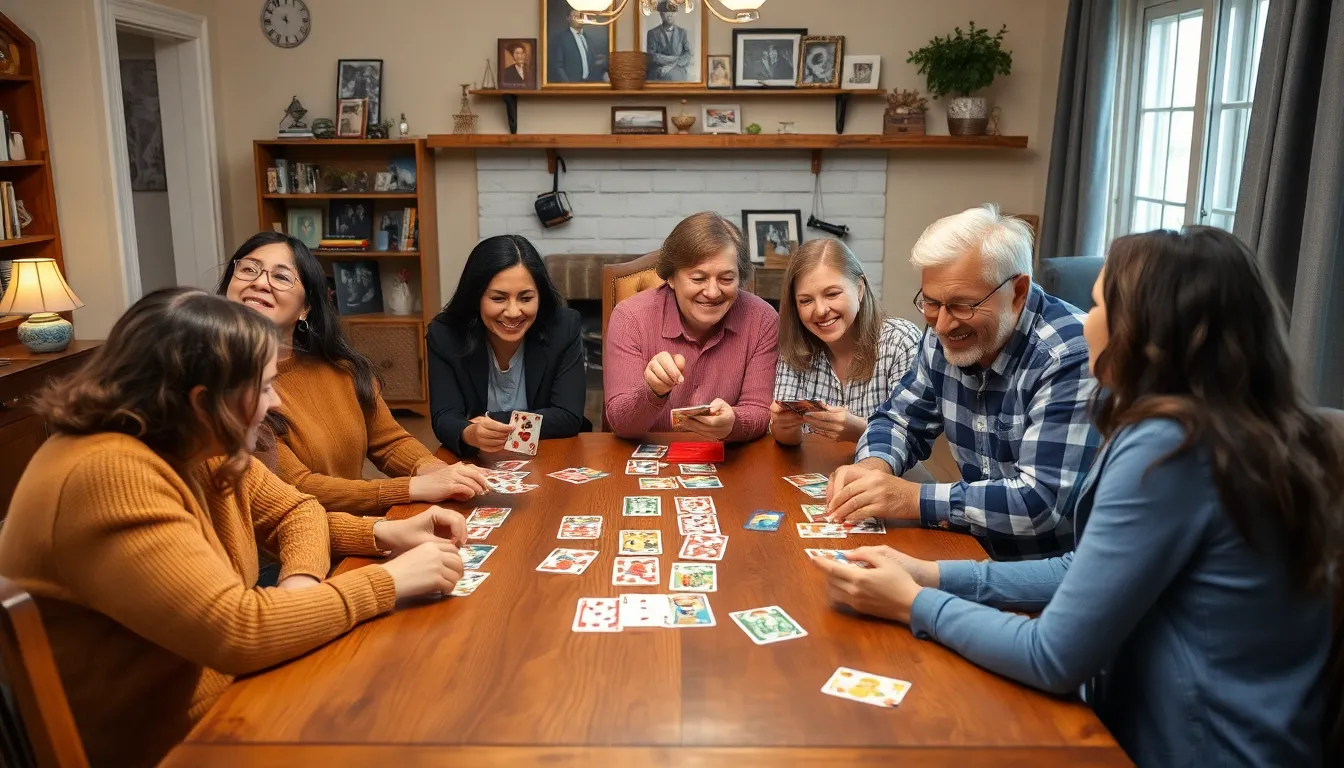
Card games offer numerous benefits for families, enhancing connections and fostering skill development.
Enhancing Family Bonds
Playing card games strengthens family relationships through shared experiences. Engaging in friendly competition creates a lively environment filled with laughter. Family members interact more, encouraging open communication and teamwork. Game nights allow members to share strategies and stories, promoting intimacy and connection. Regular participation helps to establish traditions that families cherish over time. The diverse range of card games caters to different age groups, ensuring everyone can find enjoyment together.
Developing Critical Skills
Card games significantly enhance important skills in participants. Players often practice strategic thinking while making decisions. Engaging in these games fosters problem-solving abilities as players predict opponents’ moves. Memory skills improve through tracking cards and recalling game rules. Additionally, many card games require players to calculate probabilities and odds, reinforcing mathematical concepts. Social skills also develop, as players learn to manage emotions and exhibit good sportsmanship. Families benefit greatly from these interactions, enhancing cognitive growth in a fun and engaging manner.
Popular Card Games for Families
Card games provide a range of options that cater to different family preferences. Families can enjoy bonding over both classic and modern card games that promote interaction and fun.
Classic Games
Classic card games like Uno, Go Fish, and Crazy Eights stand the test of time in family settings. Go Fish proves easy for young children, encouraging friendly competition while practicing memory skills. Uno adds excitement through its colorful cards and special action effects, making it appealing for all ages. Crazy Eights involves strategic play, helping children understand the importance of decision-making. Each game blends simplicity with fun, keeping players entertained and engaged.
Modern Variants
Modern card games introduce innovative mechanics that enhance traditional formats. Games such as Cards Against Humanity and Exploding Kittens offer humor and creativity, making gatherings lively. Sushi Go! appeals to families with its theme and quick play, providing a strategic experience without a lengthy commitment. The unique aspects of these games attract older children and adults, promoting togetherness in a contemporary way. Each modern game involves interactive components, reinforcing family bonds through laughter and shared enjoyment.
Tips for Choosing Card Games
Selecting the right card games enhances family enjoyment and bonding. Consider key factors like age appropriateness and game duration, ensuring every family member has fun.
Age Appropriateness
Choosing games that match each family member’s age creates a satisfying experience. Younger children often prefer simpler rules and vibrant illustrations, while older kids and adults enjoy games that require strategic thinking and skill. For instance, games like Uno engage various ages with easy rules. In contrast, more complex games like Sushi Go! or Exploding Kittens appeal to teens and adults with their interesting mechanics. Always assess the age range of players and select games that invite participation from everyone.
Game Duration
Playtime directly influences engagement and enjoyment. Short games, lasting around 20 minutes, maintain attention and encourage multiple rounds. Longer games, spanning over an hour, might entertain dedicated players who enjoy strategy. Selecting games based on time limits ensures flexibility during family gatherings. Games like Go Fish are perfect for quick sessions, while options like Cards Against Humanity offer longer, immersive experiences. Knowing how much time families have available helps match games to the occasion effortlessly.
Setting Up Family Game Nights
Establishing a game night requires careful planning. Setting a regular schedule encourages participation from every family member. Choose a day that works for the whole family, like Friday or Saturday evenings. Aim for consistency to build excitement and anticipation.
Gathering cards and selecting games come next. Create a list of favorite games, mixing classics and modern options to cater to various preferences. Consider involving children in the selection process for added enthusiasm. Keep a few older games and newer variants on hand to maintain freshness.
Ensure comfort during game nights. Arrange a cozy area with enough seating for everyone, and use a table that accommodates all players comfortably. Snacks and drinks can enhance the experience; choose easy options like popcorn or cookie trays that invite sharing.
Encouraging friendly competition contributes to the fun. Establish simple house rules that promote fair play. Highlight the importance of sportsmanship and celebrating everyone’s contributions to create a positive atmosphere. Engage all family members by rotating game selections to ensure everyone gets a chance to play their favorites.
Setting the right tone involves embracing the spirit of playfulness. Focus on creating an enjoyable environment that prioritizes laughter and quality time. Turn off distractions, like phones and TVs, to enhance interaction. By dedicating this time for family connections, everyone benefits from strengthened relationships and shared experiences.
Card games offer families a unique way to connect and create lasting memories. They bring laughter and friendly competition into homes while promoting essential skills like strategic thinking and teamwork. By selecting games that cater to all ages and preferences, families can ensure everyone feels included and engaged.
Regular game nights not only strengthen bonds but also establish cherished traditions that can be passed down through generations. As families gather around the table, they share experiences that enrich their relationships and foster a sense of belonging. Embracing the joy of card games can transform ordinary moments into extraordinary ones, making family time truly special.