
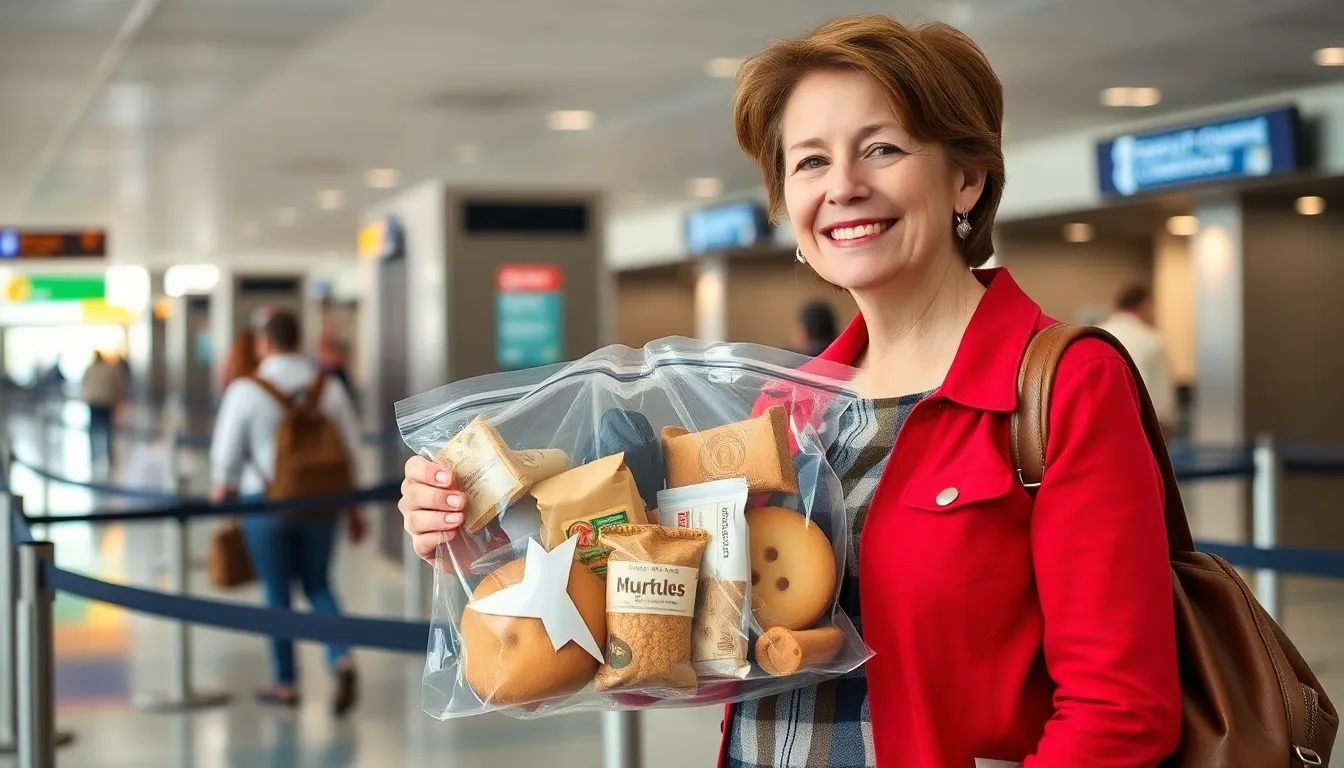
Flying can feel like a culinary adventure—or a food desert in the sky. Ever wondered if you can sneak your favorite snacks past security? The truth is, while you can bring food on an airplane, there are rules that might make you rethink that giant burrito or grandma’s famous casserole.
Imagine biting into a delicious sandwich at 30,000 feet, only to discover that the TSA has other plans. Understanding the ins and outs of airplane food policies can save travelers from the dreaded snackless flight. So buckle up and get ready to explore what tasty treasures you can pack for your next airborne journey. After all, who doesn’t want to munch on something delightful while soaring through the clouds?
Can You Bring Food On An Airplane?
Travelers can bring food on an airplane, but specific regulations apply. The Transportation Security Administration (TSA) allows solid food items in carry-on bags, while liquids and gels face stricter limits. Items like sandwiches, fruits, and granola bars pack easily and pass security checks without issues.
When considering liquids, snacks like yogurt or soups fall under restrictions. Containers must not exceed 3.4 ounces, and they must fit within a quart-sized bag. Passengers should avoid items like large burritos or casseroles, as these may raise concerns during screening.
Certain safety measures govern food items brought from outside the airport. Foods that might spoil, such as dairy or meats, often face scrutiny. Always check destination regulations; some countries prohibit specific foods.
Airport restaurants provide convenient meal options, but dining in the terminal often costs more. Prepacking snacks can lead to significant savings. Items such as nuts, dried fruits, or protein bars serve well as in-flight snacks.
Packing smart an essential strategy for travelers. Researching allowed items ahead of time eliminates surprises at security. Passing through security with clear planning enhances the travel experience, helping passengers relax and enjoy the flight.
Types Of Food Allowed
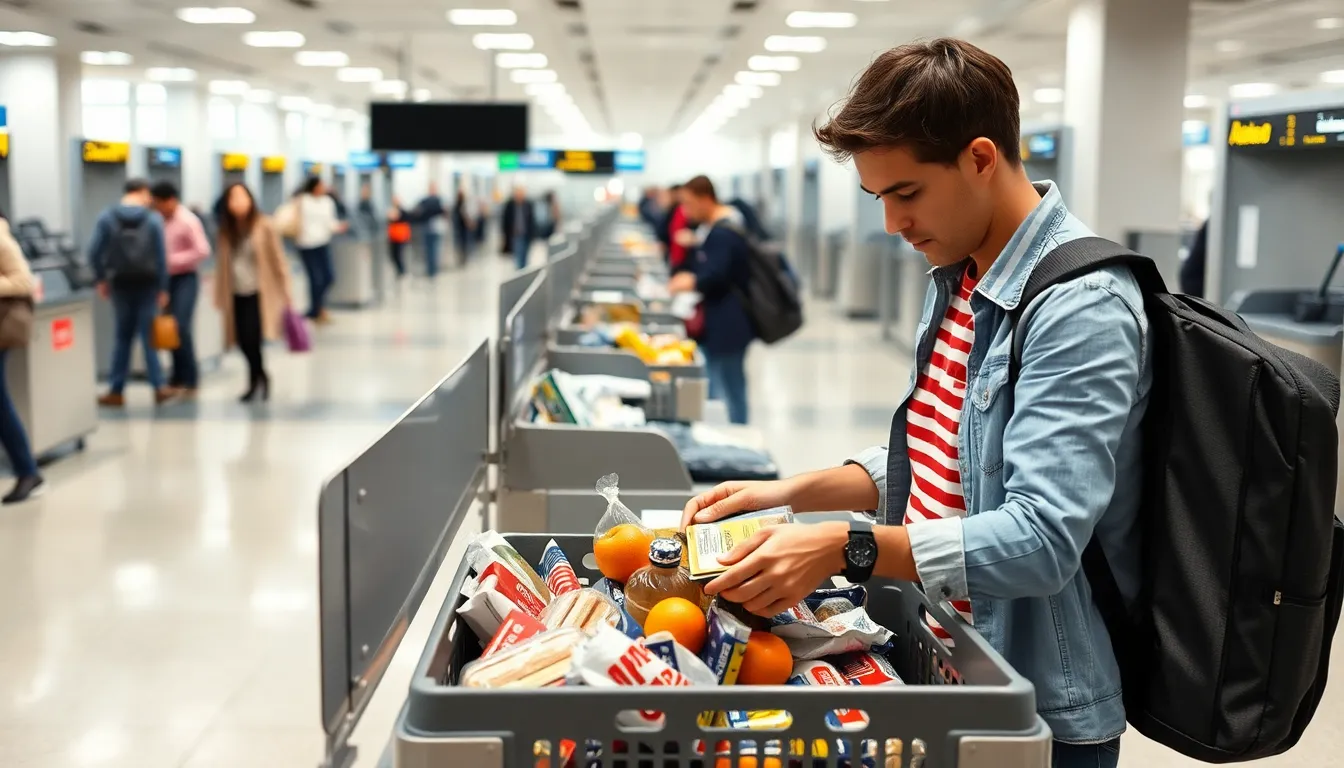
Travelers can bring a variety of food items on airplanes, but understanding categories helps ensure compliance with regulations.
Solid Foods
Solid foods generally pass security checks with ease. Sandwiches, fruits, and granola bars fit well into personal bags. Foods like chips and cookies also qualify as acceptable snacks. Each item must remain free from liquid components, ensuring faster approval. Avoid bulky items like burritos or casseroles, as they may complicate the screening process. Pre-packaged snacks often save time and hassle, making them a popular choice.
Liquid Foods
Liquid foods face stricter guidelines compared to solids. Items like soups or sauces must remain contained within 3.4-ounce containers. All liquid foods should fit inside a quart-sized bag for security checks. Yogurt also counts as liquid, subject to the same size restrictions. Travelers must be aware that some countries prohibit specific liquid foods upon entry, so thorough research aids in avoiding problems. Keeping liquid and gel food items to a minimum ensures smoother travel experiences.
Packing Tips For Airplane Food
Packing food for a flight requires careful consideration to ensure compliance with regulations and maintain food quality. It’s important to plan ahead for a smooth travel experience.
Containers and Packaging
Use adequate containers for solid food. Rigid containers seal tightly to prevent spills. Opt for clear, resealable bags to facilitate security checks. Avoid any large containers that can be cumbersome during travel. Individual portions work best for portability and ease of access. Choose lightweight packaging to minimize additional weight in the luggage. Eco-friendly materials are also great for reducing waste.
Refrigeration Needs
Consider the temperature requirements of perishable items. Items like yogurt or cheese need refrigeration during the flight. Use insulated bags with ice packs to keep food cold. Check TSA regulations to ensure compliance with ice pack size limits. Utilize frozen gel packs instead of loose ice to meet guidelines. Snack options that don’t require chilling are ideal for hassle-free packing. Always verify destination rules for food storage before traveling.
Country-Specific Regulations
Understanding country-specific regulations is crucial for travelers planning to bring food on airplanes. Each country enforces different rules regarding transporting food items, impacting travel plans.
Domestic Flights
Travelers within the U.S. can generally bring solid food items on domestic flights. Foods like sandwiches, fruits, and granola bars fit easily into carry-on bags. Liquids and gels remain a concern, so yogurt or soups must comply with the 3.4-ounce limit. Security checkpoints may scrutinize food for perishability, especially items likely to spoil. Following TSA guidelines ensures smooth travel without unexpected delays.
International Flights
International travelers face stricter regulations regarding food items. Many countries prohibit specific products, particularly fresh fruits and meats. Import restrictions vary widely, making it essential to check the destination country’s food regulations before departure. Customs agencies may confiscate prohibited items, resulting in fines or delays. Travelers should prioritize understanding each country’s rules to avoid complications when entering a foreign airport.
Traveling with food on an airplane can enhance the flying experience when done correctly. By understanding TSA regulations and destination-specific rules, travelers can avoid unnecessary complications and enjoy their favorite snacks in the air. Packing solid food items in appropriate containers ensures compliance and maintains food quality. With careful planning and smart choices, such as opting for lightweight snacks and avoiding prohibited items, travelers can savor delicious treats while saving money. Ultimately, being informed and prepared makes for a more enjoyable journey at 30,000 feet.