

In today’s fast-paced world, igniting a passion for STEM in elementary students is more crucial than ever. Imagine a classroom buzzing with the excitement of future engineers, scientists, and inventors, all while having a blast. That’s right—STEM isn’t just about equations and formulas; it’s an adventure where kids can unleash their creativity and curiosity.
Elementary STEM programs transform traditional learning into hands-on experiences that make kids say, “Wow, I didn’t know science could be this cool!” From building rockets to coding robots, these activities not only sharpen problem-solving skills but also keep the giggles flowing. So, buckle up as we explore why introducing STEM at an early age is the secret ingredient for nurturing the innovators of tomorrow.
Overview of Elementary STEM
Elementary STEM education incorporates various disciplines including science, technology, engineering, and mathematics. Engaging students during these formative years enhances critical thinking and creativity. Hands-on activities like building rockets or coding robots serve as effective tools for teaching complex concepts simply and interactively.
Implementing STEM curricula in elementary schools builds essential problem-solving skills. This approach fosters collaboration among peers while encouraging an innovative mindset. Research shows that early exposure to STEM subjects increases student interest in pursuing related fields in the future, cultivating the next generation of thinkers and creators.
Teacher support plays a crucial role in delivering quality STEM education. Professional development programs enhance instructors’ skills, enabling them to create an exciting learning environment. When educators feel confident in their STEM teaching methods, they can better inspire and engage their students.
Community partnerships often enhance STEM programs, providing resources and real-world experiences. By connecting classrooms with local scientists and engineers, students gain insight into the relevance of STEM in everyday life. Such interactions broaden perspectives and demonstrate potential career paths.
Moreover, integrating technology in the classroom enriches the learning experience. Digital tools and resources can support various learning styles, making STEM education more accessible. Teachers can utilize online platforms and apps to supplement traditional lessons, maintaining student interest and motivation.
Overall, early STEM education establishes a foundation for lifelong learning and exploration in science and technology. As elementary students engage with these subjects, they build the skills necessary to navigate an increasingly complex world.
Importance of Elementary STEM Education
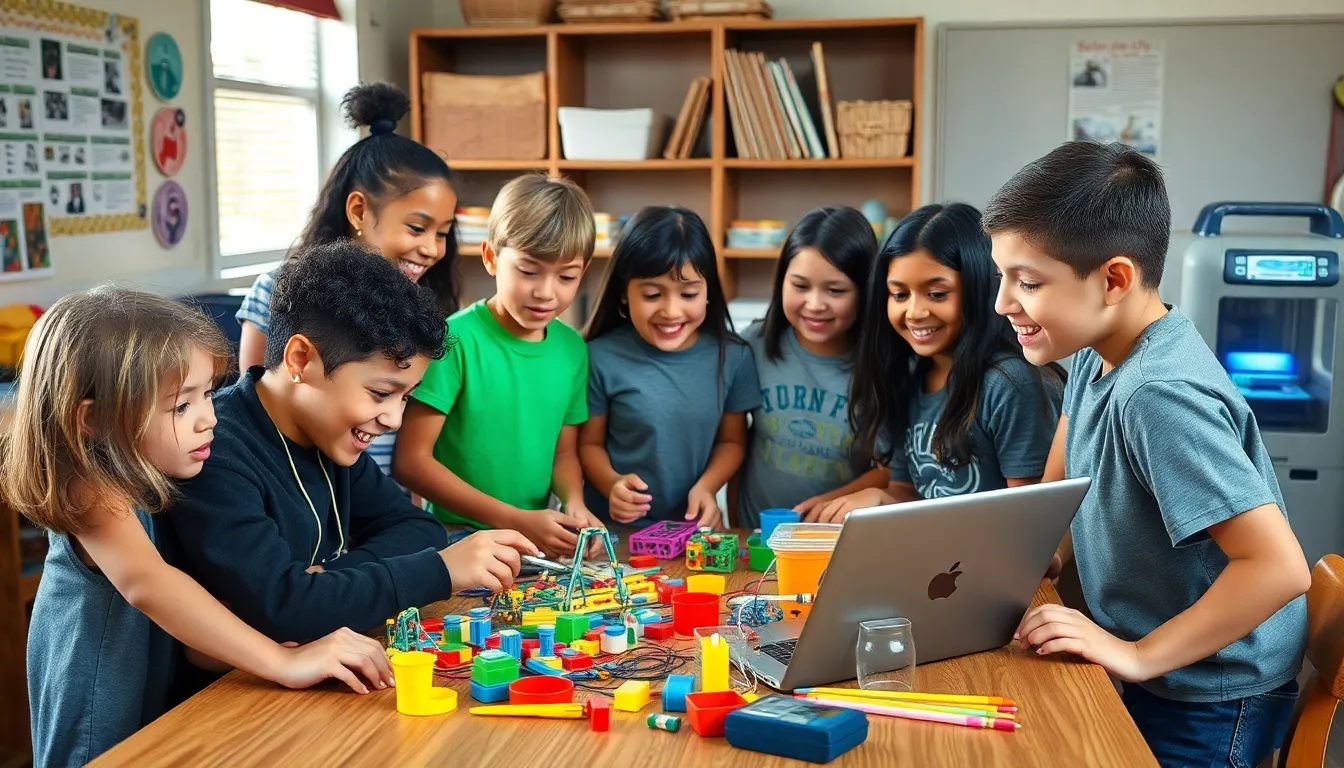
Elementary STEM education plays a critical role in shaping future innovators. Engaging students through hands-on experiences cultivates a deeper understanding of essential concepts.
Fostering Critical Thinking
Critical thinking thrives in a STEM-focused environment. Students tackle real-world problems, which enhances their analytical skills. By collaborating in teams, they learn to evaluate solutions and approach challenges from different angles. Research indicates that early exposure to STEM subjects positively influences long-term problem-solving abilities. Encouraging inquiry and discussion during lessons empowers students to question assumptions and explore diverse outcomes. Such an environment nurtures both independent and collaborative thinking, key components in lifelong learning.
Encouraging Creativity
Creativity flourishes in STEM education settings. Students engage in projects that require innovative approaches, such as designing a new product or solving a community issue. Each task inspires them to think outside the box, blending imagination with technical skills. The use of technology further enhances creativity, allowing for exploration of unique ideas through coding or 3D modeling. Engaging in diverse activities not only develops creative skills but also boosts confidence in their ability to produce original work. Ultimately, this creative mindset serves as a foundation for future pursuits in various fields.
Key Components of Elementary STEM
Elementary STEM education encompasses four main disciplines: Science, Technology, Engineering, and Mathematics. Each component contributes to a comprehensive learning experience that inspires young minds.
Science
Science education fosters curiosity in students. Engaging with hands-on experiments helps them understand basic principles like gravity and states of matter. Students explore phenomena through observation and inquiry, leading to a deeper appreciation for the natural world. Practical activities like growing plants or conducting simple chemical reactions encourage inquiry-based learning. Curiosity-driven lessons create a solid foundation for scientific literacy among elementary students.
Technology
Technology integration enhances the learning environment. Digital tools and resources, such as coding software and interactive simulations, facilitate hands-on experiences. Introducing technology early prepares students for a digital world. It allows them to experiment with concepts like programming and robotics. Moreover, technology encourages collaboration among peers through group projects, where students can learn from one another’s strengths. Addressing diverse learning preferences, technology makes STEM concepts more accessible and engaging.
Engineering
Engineering challenges encourage problem-solving and critical thinking. Tasks like building bridges from everyday materials or designing simple machines engage students actively. These challenges promote creativity as students brainstorm innovative solutions. Working in teams allows for collaborative efforts, where they share ideas and strategies. Engineering projects illustrate the application of scientific principles while enhancing communication skills. This real-world connection shows students how engineering impacts daily life.
Mathematics
Mathematics serves as the foundation for all STEM disciplines. By introducing concepts such as addition, subtraction, measurement, and data analysis, students develop essential skills. Practical applications like budgeting for a project or graphing data from experiments make math relevant and engaging. Games and interactive activities also reinforce mathematical concepts while promoting teamwork. Understanding mathematics cultivates logical reasoning, essential for future academic endeavors in STEM-related fields.
Effective Teaching Strategies for Elementary STEM
Effective teaching strategies play a vital role in delivering quality elementary STEM education. These strategies foster engagement and enhance students’ understanding of critical concepts.
Hands-On Learning
Hands-on learning remains crucial in STEM education. Students actively participate in experiments that spark curiosity and encourage exploration. By building models or conducting science experiments, they experience concepts firsthand. Engagement increases when they manipulate materials, which enhances retention of knowledge. For instance, constructing simple machines allows them to grasp fundamental engineering principles. Practical applications create excitement, reinforcing learning while making abstract concepts tangible. Implementing hands-on activities connects theory with practice, ensuring students find enjoyment in the learning process.
Collaborative Projects
Collaborative projects effectively enhance teamwork skills among elementary students. Group activities encourage students to share ideas and brainstorm solutions together. Working in teams often cultivates communication skills and fosters a supportive learning environment. For example, students might collaborate to design a small bridge using specific materials, applying engineering concepts while exchanging diverse perspectives. These projects also allow students to debate and refine their ideas, leading to innovative solutions. Engaging in collaborative projects nurtures critical thinking and promotes a sense of accountability among peers, preparing young learners for future challenges.
Challenges in Implementing Elementary STEM
Implementing elementary STEM programs presents several challenges that educators must navigate. Limited funding often constrains resources, making it difficult for schools to acquire necessary materials or technologies. Teacher training remains another significant hurdle; many instructors lack adequate professional development opportunities specific to STEM education.
Curriculum integration poses additional obstacles. Combining STEM subjects into a cohesive program requires careful planning and alignment with educational standards. Consequently, this complexity can lead to inconsistent applications across different classrooms.
Apart from these logistical issues, community support plays a vital role. Schools may struggle to establish partnerships with local businesses and organizations that can provide real-world experiences or mentorship. Without such connections, the relevance of STEM education might diminish, impacting student engagement.
Moreover, diverse student needs challenge educators in delivering inclusive STEM experiences. Accommodating various learning styles and abilities demands adaptive teaching methods and resources. Consequently, this requirement can strain instructional time and focus.
Assessment techniques also require attention. Traditional testing methods may not accurately capture students’ problem-solving abilities or collaborative skills. Therefore, educators often seek alternative assessment strategies that reflect the goals of STEM education.
Finally, fostering a culture of innovation within schools necessitates sustained commitment from administration and faculty. Without a supportive environment that encourages creativity and experimentation, students may miss out on enriching learning experiences in STEM. Evidence indicates that overcoming these challenges leads to more effective and fulfilling STEM education for elementary students.
Elementary STEM education is pivotal in shaping the future of young learners. By engaging students through hands-on activities and collaborative projects, it cultivates essential skills that extend beyond the classroom. These experiences not only spark curiosity but also build a solid foundation for critical thinking and creativity.
As schools work to overcome challenges like funding and teacher training, the role of community support becomes increasingly important. Partnerships can enhance resources and provide real-world connections that enrich STEM learning. With a commitment to fostering innovation and inclusivity, educators can ensure that every student benefits from a robust STEM education. This early exposure lays the groundwork for a generation of thinkers and creators ready to tackle the complexities of tomorrow’s world.