Every parent knows that getting a preschooler ready for the day can feel like herding cats—chaotic and a bit messy. Yet, establishing a solid routine can transform that morning madness into a smooth sail. Preschool routines aren’t just about keeping the peace; they’re the secret sauce to nurturing happy, confident little learners.
Imagine a world where your child hops out of bed excited for the day ahead, rather than resembling a grumpy potato. With a sprinkle of structure and a dash of fun, preschool routines can make that dream a reality. They help kids feel secure and ready to tackle new adventures, whether it’s sharing crayons or mastering the art of the nap. Dive into the world of preschool routines and discover how to turn daily chaos into delightful moments.
Importance of Preschool Routines
Preschool routines play a crucial role in a child’s development and support educators in providing a structured learning environment. Establishing consistent habits promotes security and confidence in young learners.
Benefits for Children
Routines enhance a child’s sense of security and predictability. When children know what to expect, they feel prepared for the day ahead. Emphasizing regular activities fosters independence and helps develop time management skills. Engaging in routines encourages positive social interactions as children learn to share and cooperate with peers. Structure also supports emotional regulation, allowing preschoolers to manage feelings and behavior effectively.
Benefits for Educators
Educators benefit from preschool routines through enhanced classroom management. A consistent routine streamlines daily activities, enabling educators to maximize instructional time. Clear expectations reduce disruptions, making the learning environment more conducive to education. Routines also foster stronger relationships between educators and students, encouraging trust. By integrating structured moments, teachers can better assess individual student needs and tailor their approaches, ultimately elevating the overall learning experience.
Key Components of Effective Preschool Routines
Effective preschool routines rely on clear structure and consistency. Daily activities and transitional periods play crucial roles in shaping a child’s experience.
Daily Schedules
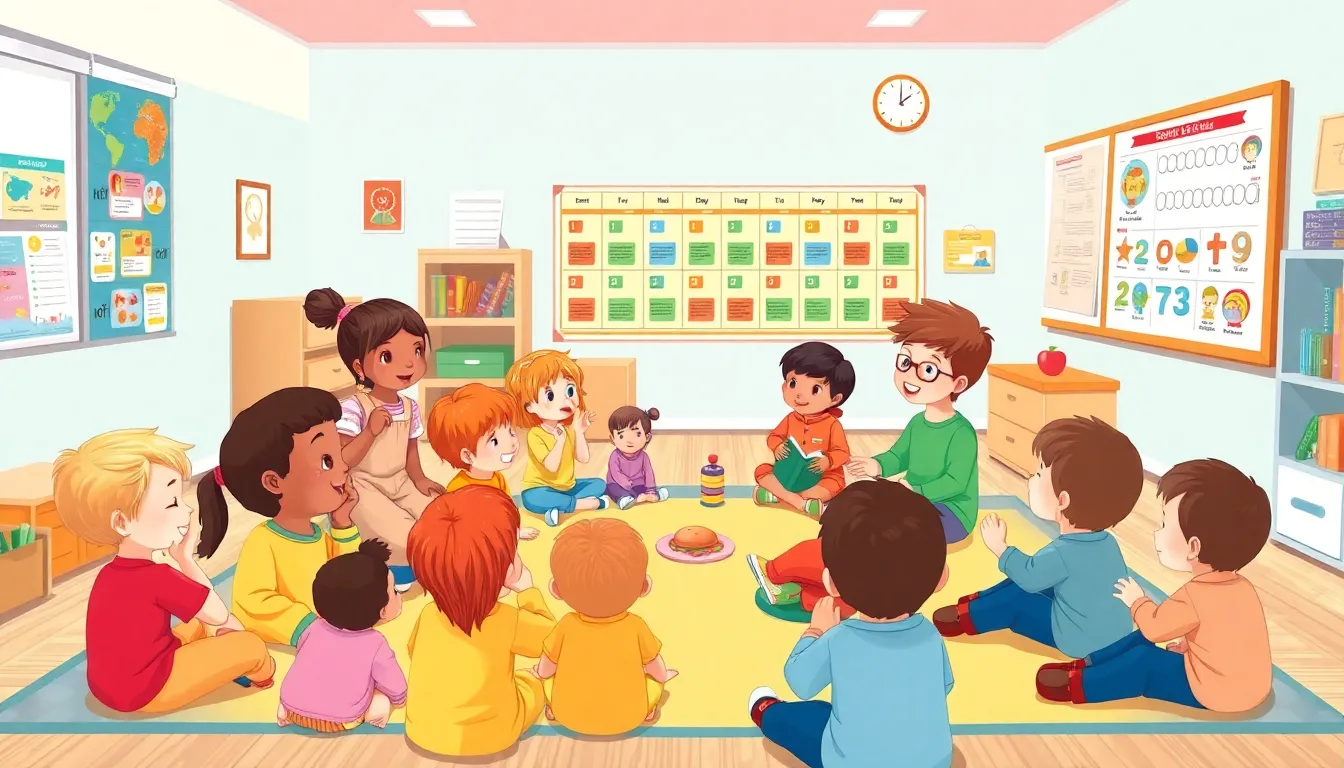
Daily schedules provide a framework for both learning and play. Consistent timings help children anticipate what comes next. Activities like circle time, snack breaks, and storytelling occur at set intervals, fostering a sense of security. Children thrive on predictability, which boosts their confidence and reduces anxiety. Engaging in a mix of educational and recreational activities ensures that every child remains active and interested throughout the day. Clear visual schedules aid in reinforcing understanding, making it easier for even the youngest learners to follow along.
Transition Times
Transition times offer vital moments for children to adjust between activities. Effective transitions minimize disruptions and maintain engagement. Using songs or signals to indicate changes can help children smoothly shift their focus. Teachers and parents play critical roles in guiding these changes. Gentle reminders of what’s next prepare children for what’s to come, enhancing their readiness. Opportunities for brief activities, such as stretching or breathing exercises, can also ease anxiety during transitions. Establishing these routines fosters a supportive and harmonious learning environment, promoting calmness during shifts between tasks.
Strategies for Implementing Preschool Routines
Creating effective preschool routines involves practical strategies that foster engagement and support learning. Key elements like engaging activities and visual supports play significant roles in reinforcing these routines.
Engaging Activities
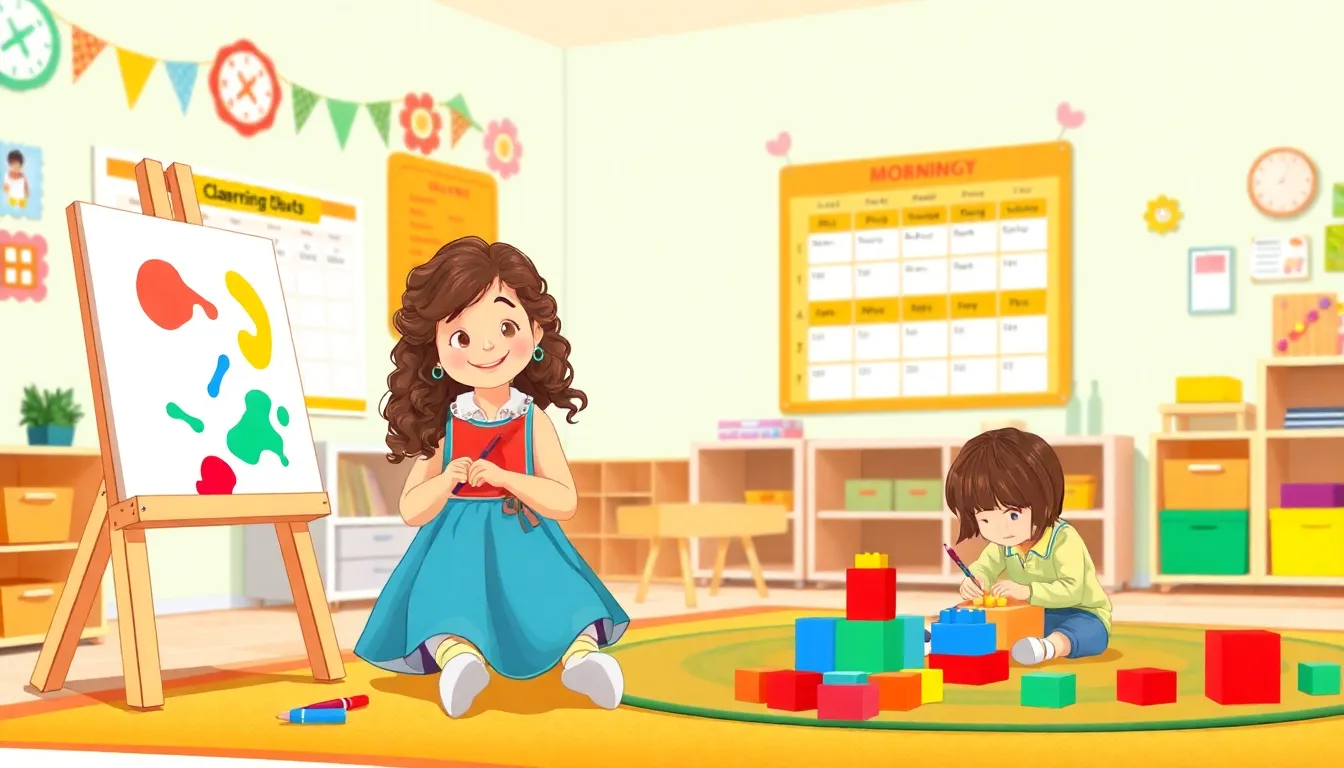
Incorporating engaging activities makes routines enjoyable. Use hands-on experiences such as art projects, music, or building blocks to maintain children’s interest. Structured playtime encourages creativity while allowing educators to incorporate learning objectives seamlessly. Regularly rotating activities helps sustain excitement and anticipation for daily tasks. Simple transitions, such as a fun song or a countdown, signal the end of one activity and the beginning of another. Engaging activities enhance focus and cooperation, leading to a smoother routine.
Visual Supports
Visual supports provide helpful cues for preschoolers by enhancing understanding and predictability. Charts displaying the daily schedule allow children to see what comes next, fostering independence. Color-coded visuals can represent different activities, making it easier for young learners to recognize transitions. Picture cues simplify communication, especially for non-verbal children. Implementing visual supports also serves as reminders, reducing anxiety surrounding changes in routine. Regularly updating these tools keeps them fresh and relevant.
Challenges in Establishing Routines
Establishing preschool routines involves several challenges that may arise during implementation. Recognizing these hurdles aids in developing effective strategies.
Resistance from Children
Children often resist new routines. This resistance can result from a desire for independence or a preference for familiar activities. Transitioning from free play to structured time poses significant challenges. Over time, consistent reinforcement helps children adapt. Using engaging methods, like songs or games, makes transitions smoother. Clear communication about what to expect also supports children in acceptance. Seeking their input during planning fosters cooperation and enthusiasm. Motivating children through positive reinforcement encourages adherence to routines.
Adapting to Different Needs
Each child has individual needs and preferences. Understanding these differences is crucial for effective routine implementation. Incorporating flexibility within the structure allows for personalized experiences. Some children may require additional time for transitions, while others thrive on quick changes. Adjusting routines based on specific behaviors and temperaments enhances engagement. Educators can use observation to identify triggers and develop tailored strategies. Creating alternative activities for moments of frustration encourages participation. Prioritizing communication between parents and educators promotes consistency and understanding of each child’s unique needs.
Establishing effective preschool routines is vital for nurturing confident and happy learners. A well-structured morning not only eases the daily chaos but also fosters independence and social skills. By incorporating engaging activities and visual supports, parents and educators can create an environment where children feel secure and excited to learn.
Flexibility within routines allows for personalized experiences that cater to individual needs, making transitions smoother and more enjoyable. With consistent communication between home and school, everyone can work together to support each child’s growth. Ultimately, embracing the power of routine can transform preschool experiences into cherished moments of discovery and joy.